Every facility manager wants a number over the phone, and every honest contractor is reluctant to give one. Not because of games, but because the slab you already own determines most of the price.
Here is the range, what moves it, and how to tell whether two proposals are actually comparable.
The working range
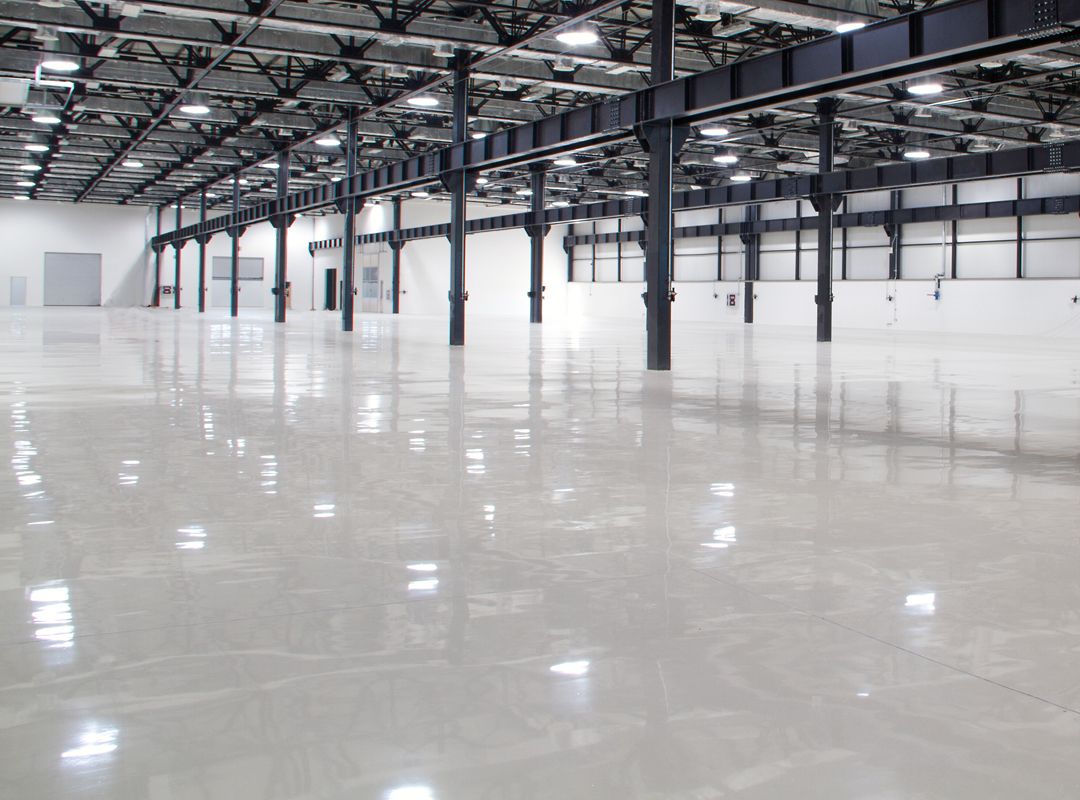
Most commercial systems in West Michigan land between $4 and $9 per square foot installed. Simple polished concrete on a good new slab sits near the bottom. Urethane mortar with cove base and drainage work in a food plant sits at the top or above it.
What actually drives the number
Five variables account for nearly all of the variation between projects.
- Slab condition: contamination, cracks, spalls and previous coatings all add preparation hours
- Moisture: a mitigation primer is a real line item when the testing calls for it
- System build-up: number of coats, flake broadcast, topcoat chemistry and thickness
- Detailing: cove base, drains, equipment pads, transitions and striping
- Schedule: nights, weekends and phased installs cost more than open access
Free assessment
Not sure which system your facility needs? We will walk the floor, test the slab, and give you an itemized proposal at no cost.
Request a Free QuoteWhy square footage lowers the rate
Mobilization, containment and equipment staging are largely fixed costs. Spread across 2,000 square feet they are significant; across 25,000 they nearly disappear. Larger projects almost always carry a lower per-foot rate.
How to compare two bids
Put them side by side and look for the same five things. If one proposal names its preparation method, its moisture test results, its product data sheets and its warranty terms, and the other says 'epoxy floor coating, 12,000 sq ft,' they are not competing on the same work.
The cheap bid is usually cheap because preparation was shortened, a thinner build was specified, or moisture was ignored. All three show up eighteen months later.