West Michigan puts commercial concrete through a seasonal stress test that most of the country never sees: lake-effect moisture, heavy de-icing, and dozens of freeze-thaw cycles every winter.
The damage is concentrated and predictable, which means it is also preventable.
How freeze-thaw scaling works
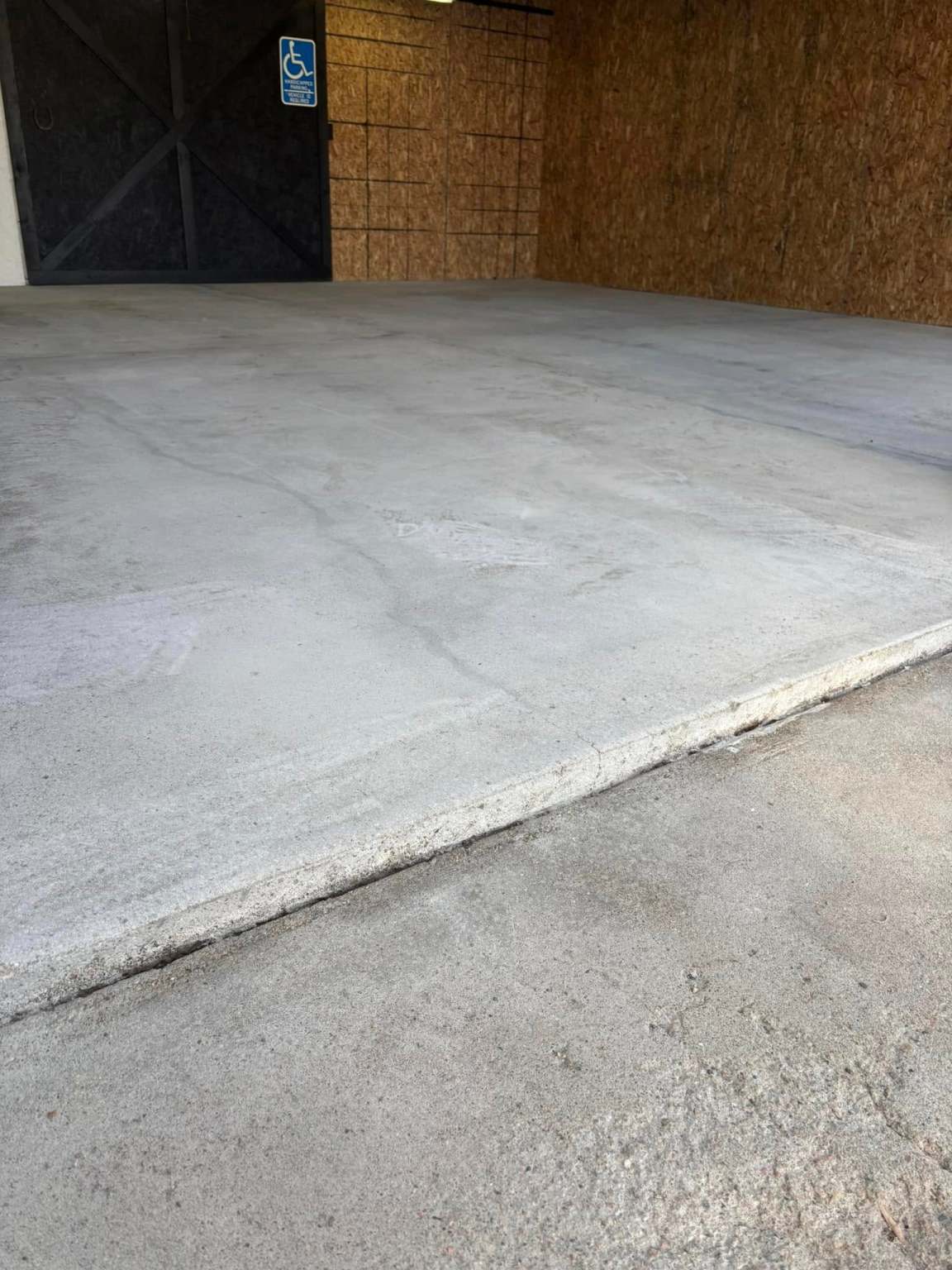
Water absorbs into porous concrete, freezes, expands roughly nine percent, and pushes the surface apart from the inside. Thaw, repeat, and the top layer begins flaking away.
Once scaling starts it accelerates, because each flake exposes more porous concrete to the next cycle.
Why de-icing salt makes it worse
Chlorides do two things. They drive the freezing point down, which multiplies the number of freeze-thaw cycles a slab experiences in a season. And they penetrate to reinforcing steel, where corrosion expands and fractures the concrete from within.
A tracked-in salt brine also attacks the concrete surface chemically, not just physically.
Free assessment
Not sure which system your facility needs? We will walk the floor, test the slab, and give you an itemized proposal at no cost.
Request a Free QuoteThe zones that fail first
Winter damage is not evenly distributed. In almost every building it shows up in the same four places.
- Entry vestibules where slush is tracked in and pools
- Dock doors and thresholds cycling between inside and outside temperature
- Vehicle bays where salt-laden snow melts off wheel wells
- Exterior aprons, ramps and loading approaches
What prevention looks like
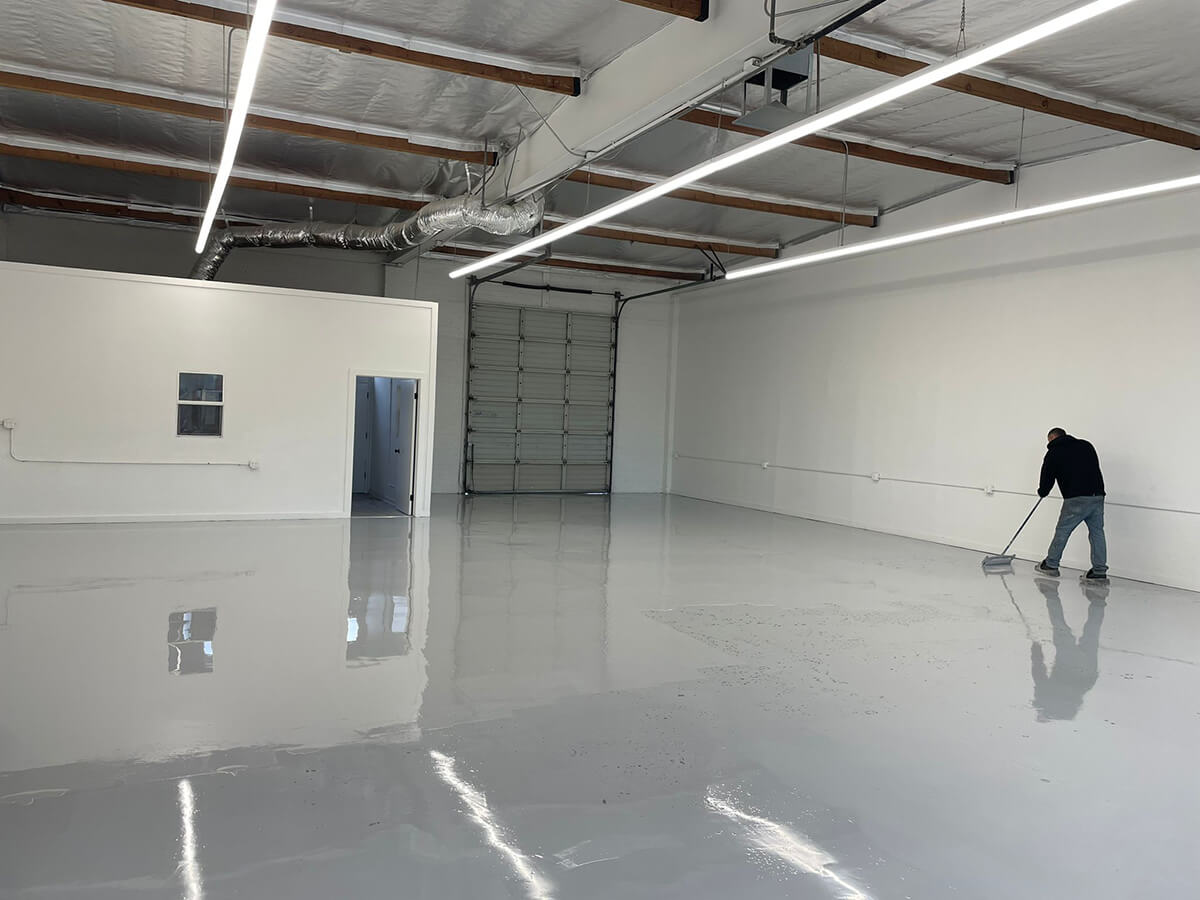
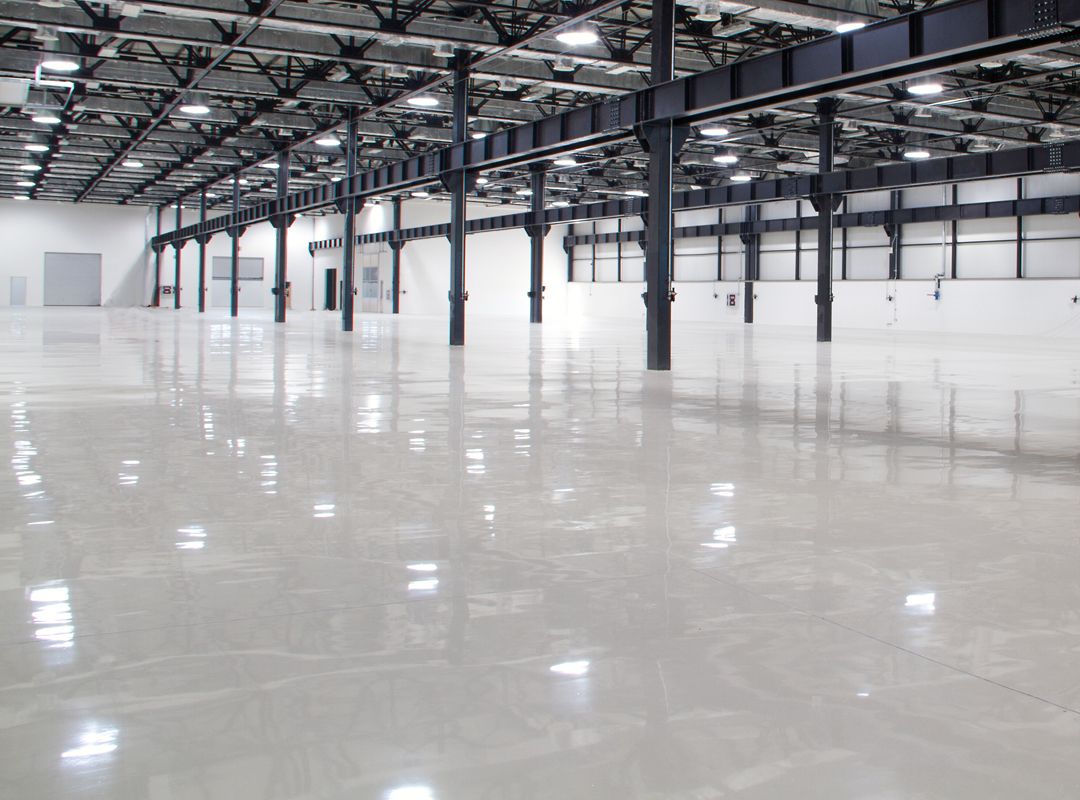
A sealed, chemically resistant coating stops water and chloride from entering the concrete at all. Non-porous means nothing to freeze inside the slab.
Pair that with the practical measures: entry matting, prompt slush removal, and a chloride-free de-icer where you can specify one.
The best time to coat winter-exposed zones is late spring through early fall, when slab temperature and humidity are easiest to control.