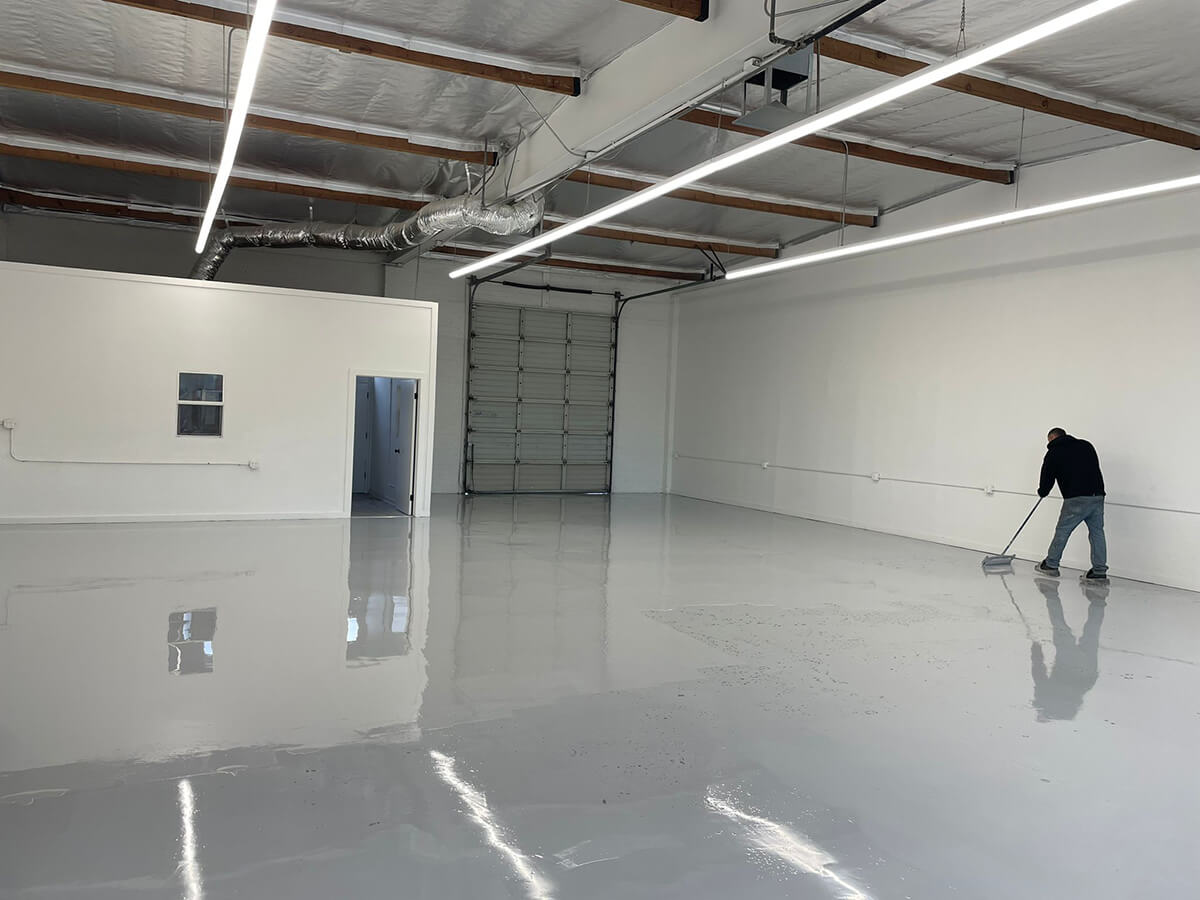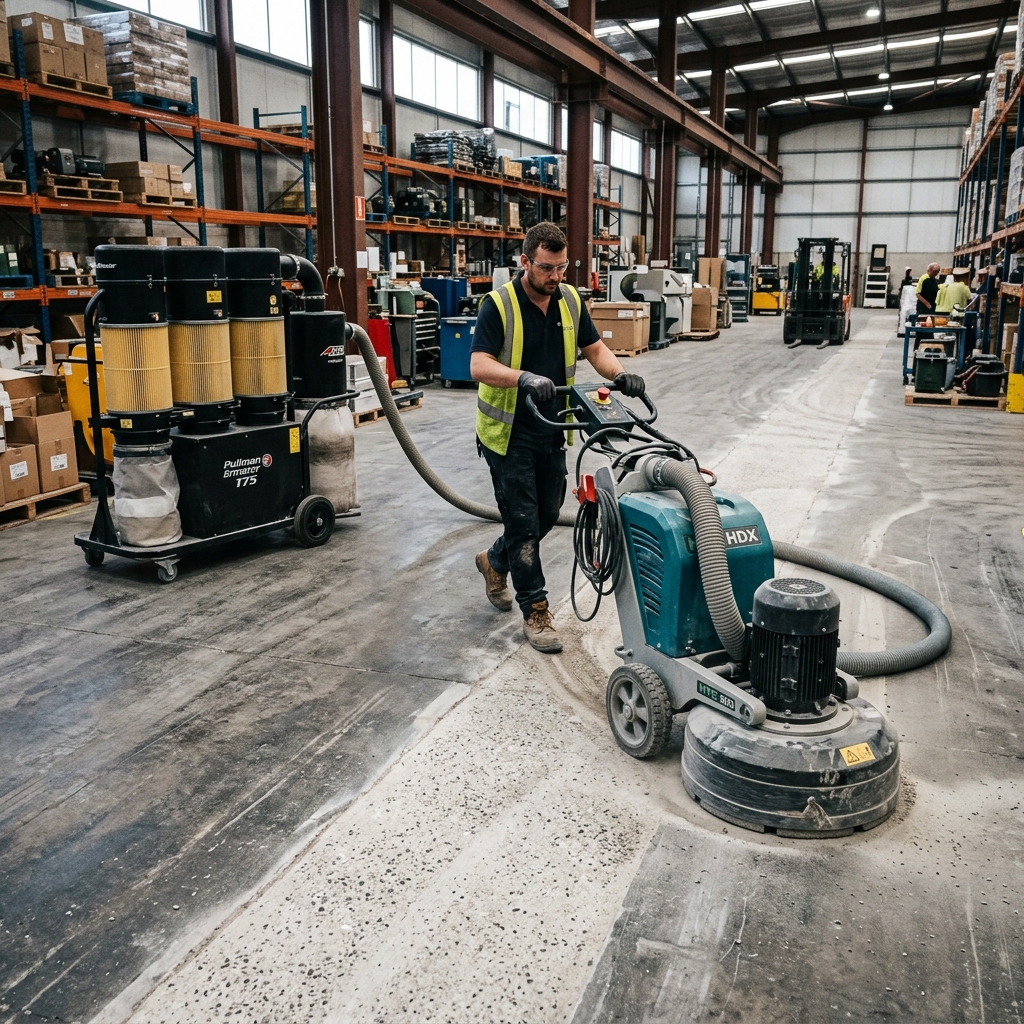
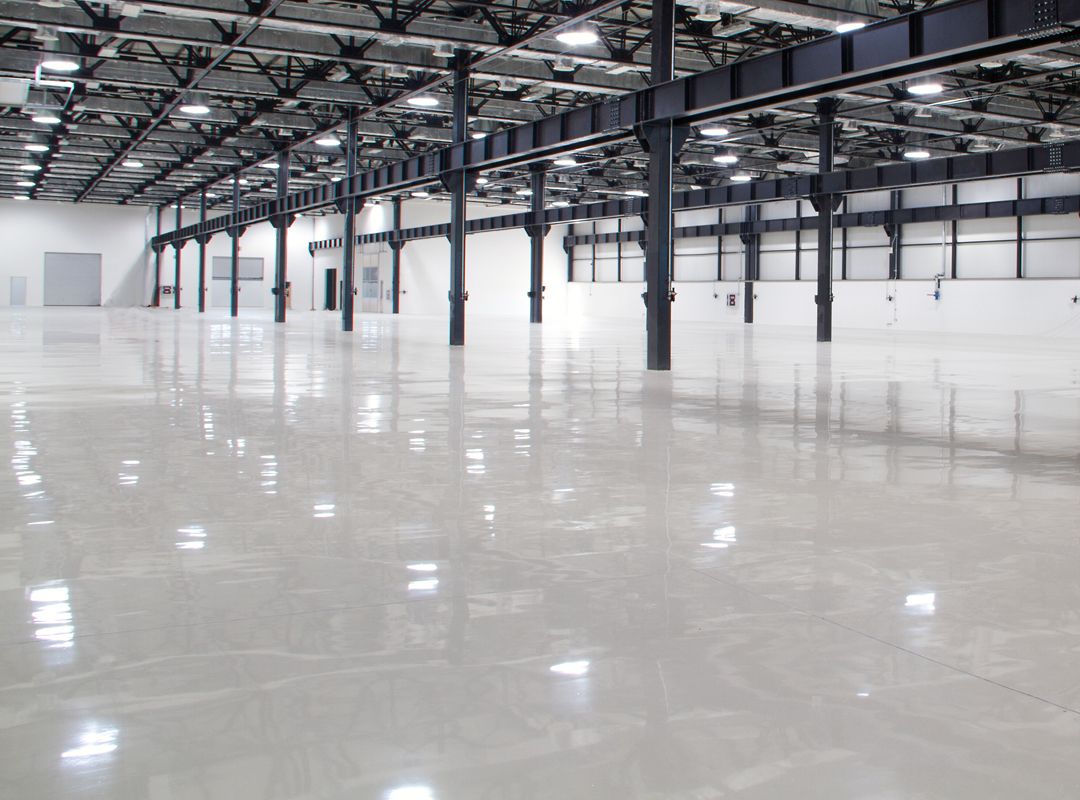
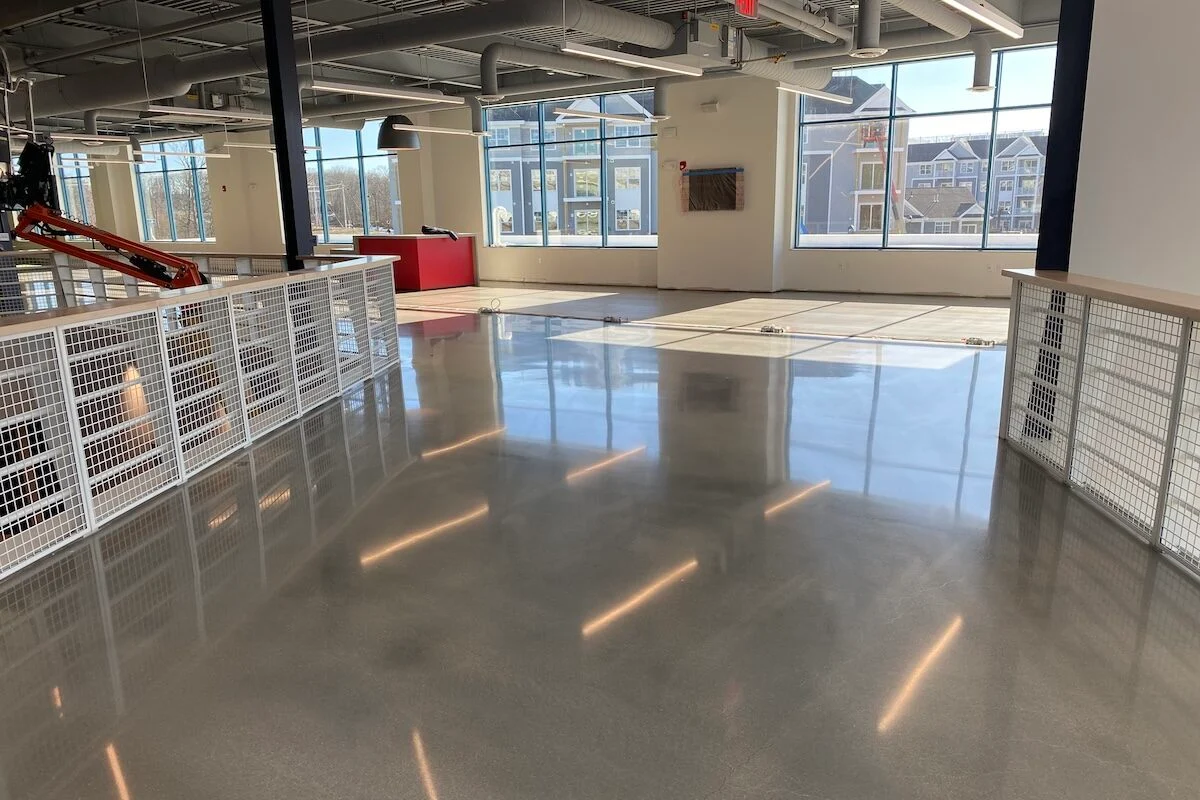
Polished concrete and resinous coatings solve overlapping problems in completely different ways. A coating adds a protective layer on top of the slab. Polishing refines and hardens the slab itself.
Neither is universally better. The decision comes down to chemical exposure, maintenance capacity and how the space is used.
Choose polished concrete when
The slab is in good structural condition, chemical exposure is light, and you want a finish that will never delaminate because there is nothing on top to delaminate.
Polished floors last decades, need no recoating, contain no VOCs, and often contribute to LEED credits. Maintenance is routine dust mopping and periodic burnishing.
- Retail, showroom and public-facing spaces
- Warehouses with light-to-moderate chemical exposure
- New pours where the slab quality is known
- Buildings you intend to hold long term
Choose a coating when
The floor faces real chemistry — oils, solvents, acids, caustics — or needs a specific color, texture or slip rating that concrete cannot provide on its own.
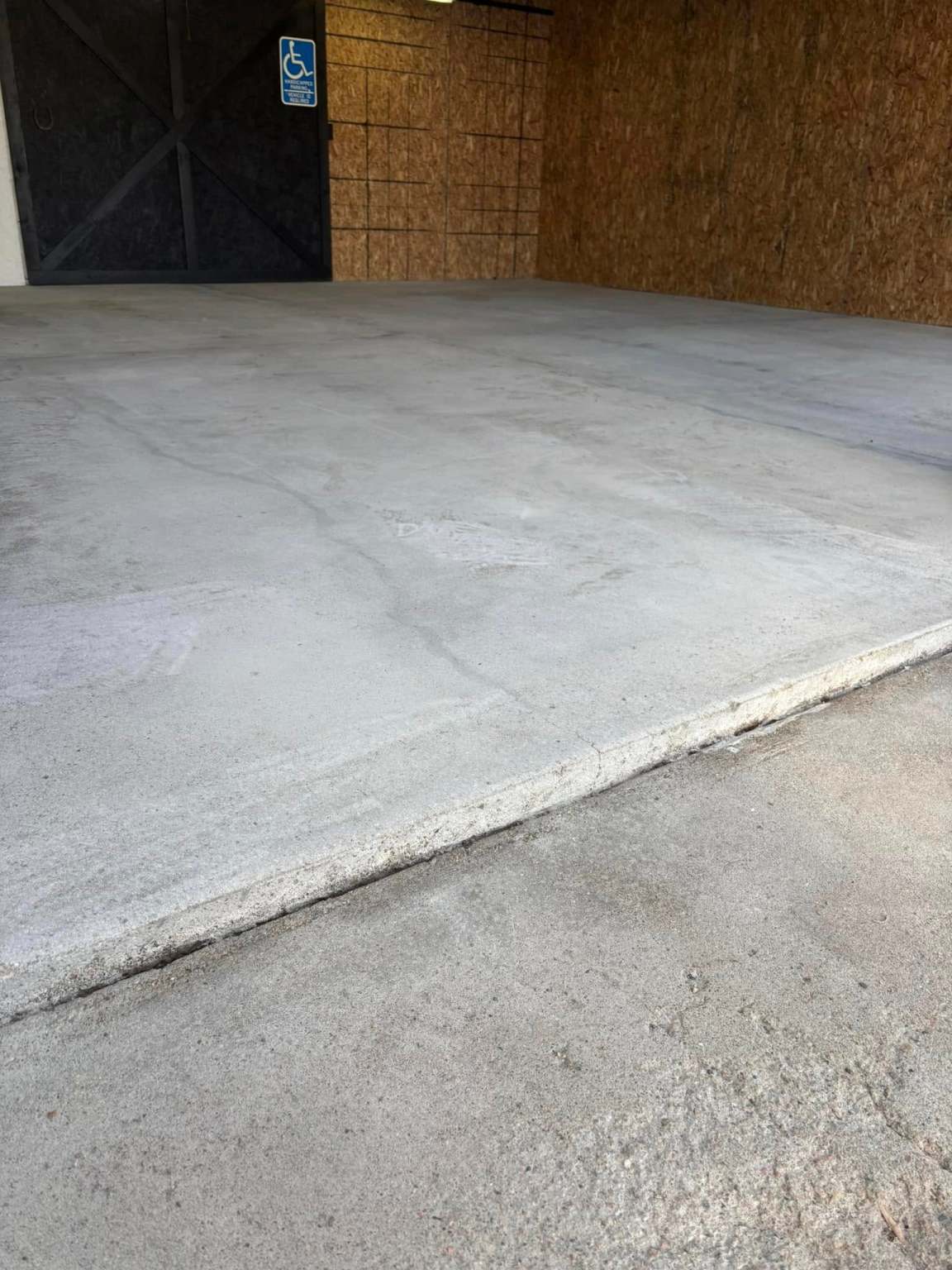
Coatings also rescue slabs that are too damaged, too contaminated or too inconsistent to polish attractively.
- Food plants, commercial kitchens and washdown areas
- Auto service bays and machining environments
- Facilities needing safety striping or brand colors
- Slabs with visible damage or previous repairs
Free assessment
Not sure which system your facility needs? We will walk the floor, test the slab, and give you an itemized proposal at no cost.
Request a Free QuoteThe honest cost comparison
Polishing usually costs less up front on a good slab and almost nothing over its lifetime. Coatings cost more initially and may need a topcoat refresh after many years of heavy use.
But a polished floor in a solvent-exposed shop will stain permanently, and no lifetime savings makes up for that. Match the system to the exposure first, then compare cost.